 English

Views: 0 Author: Site Editor Publish Time: 2025-12-03 Origin: Site


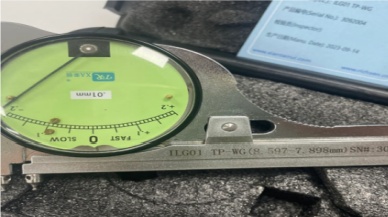
In the world of manufacturing, precision is key. Every component, from intricate mechanical parts to robust industrial machinery, must be measured and tested with the utmost accuracy. Among the various tools used in this process, a lead gauge stands out as a crucial instrument for measuring and ensuring the correct dimensions of a product. But what exactly is a lead gauge, and why is it essential in the manufacturing process?
This article will provide an in-depth look at what a lead gauge is, how it functions, and its role in ensuring quality control across various manufacturing sectors. As a company committed to excellence, TIANJIN RICHSEN OIL EQUIPMENT CO., LTD is proud to share insights into this vital tool used to maintain precision and consistency in production.
A lead gauge is a specialized measuring instrument used to measure the lead of threads in various types of fasteners, such as bolts, nuts, screws, and other threaded components. The "lead" refers to the distance a threaded part moves forward with each full rotation of the thread. It is a crucial measurement in threaded components because it determines how well two threaded parts fit together and perform under load. A lead gauge ensures that the threading on these components is consistent, precise, and suitable for its intended use.
Lead gauges are commonly used in applications where thread accuracy is critical, such as in the aerospace, automotive, and oil & gas industries. They play a crucial role in quality control and are essential for ensuring that fasteners meet the required tolerances and specifications.
A lead gauge typically consists of a set of teeth or notches that correspond to the lead of a specific threaded component. These teeth are designed to fit precisely into the threads of a bolt or screw to measure the lead. The gauge is inserted into the threads of a component, and if the gauge fits without resistance, it indicates that the lead is within the desired range. If the gauge does not fit properly, it suggests that the lead is either too tight or too loose, which can compromise the performance of the component.
The lead gauge can be made of various materials, such as stainless steel or high-carbon steel, depending on the application and the precision required. It's designed for durability, as it needs to withstand constant use and provide accurate measurements over time.
A fixed lead gauge is the most common type used in manufacturing. It features a set of predefined measurements that correspond to specific lead values. These gauges are typically used for mass production and standardized parts where the lead dimensions are consistent and don’t change from one batch to another. The fixed lead gauge is easy to use and provides quick feedback on whether the lead is within acceptable tolerance levels.
An adjustable lead gauge allows for more flexibility in measurements. This type of gauge can be customized to measure different lead values and can be adjusted to accommodate parts with varying thread pitches. Adjustable lead gauges are ideal for parts that have non-standard thread dimensions or are being produced in small batches where precision is critical.
Thread lead micrometers are highly accurate devices used to measure the lead of threaded components. These micrometers work similarly to traditional micrometers but are specifically designed for measuring the lead of threads. They provide digital or analog readings and are often used in high-precision applications where exact measurements are necessary. These micrometers are more commonly used in research and development environments or in industries that demand extremely high precision.
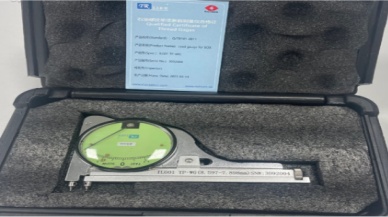
In industries such as automotive and aerospace manufacturing, the performance of threaded components is vital. Threads must fit together seamlessly to ensure secure fastening. A lead gauge ensures that the lead of the threads is within the specified range, helping to maintain thread compatibility between different components. A mismatch in lead can lead to improper engagement between parts, resulting in weak connections, poor performance, or even failure of the component.
Maintaining consistency in manufacturing is key to producing reliable products. Lead gauges are an essential tool for quality control, as they help manufacturers assess whether parts meet the specified thread standards. Consistency in lead measurements means that every part will fit and function as expected, preventing defects that could impact the overall quality of the final product.
By using a lead gauge during the production process, manufacturers can quickly detect any issues with the threads. Early detection helps avoid producing defective parts that would require rework or lead to material waste. This reduces manufacturing costs and ensures a more efficient production process.
Certain industries, such as the oil & gas and aerospace sectors, require fasteners to meet specific standards for safety and reliability. Lead gauges help manufacturers comply with these strict standards by ensuring that all threaded components meet the required tolerances for lead. This is especially important in industries where the failure of a single part could result in significant safety hazards or operational downtime.
In automotive manufacturing, precision is critical when assembling engine components, suspension systems, and other high-stress parts. Lead gauges ensure that bolts, nuts, and screws are manufactured with the correct lead dimensions, guaranteeing a secure fit and reliable performance. Whether it's for engine mounting or exhaust system assemblies, accurate lead measurements are essential for vehicle safety and functionality.
The aerospace industry requires extremely high-precision components to ensure the safety and reliability of aircraft. Lead gauges are commonly used to measure the threads on fasteners used in engines, landing gear, and other critical systems. The ability to measure thread lead accurately ensures that parts are assembled with the necessary precision, reducing the risk of mechanical failure.
In the oil and gas industry, fasteners used in drilling equipment, pipelines, and offshore platforms must withstand harsh conditions such as high pressure, temperature fluctuations, and corrosive environments. Lead gauges are crucial in ensuring that threaded components used in these applications meet the exact specifications required for safety and performance. Accurate lead measurements help to prevent failures in mission-critical equipment.
Lead gauges are also commonly used in the production of precision machinery. For equipment such as CNC machines, lathes, and milling machines, threaded components need to fit with high precision to ensure the smooth operation of the machinery. A small error in lead measurement can cause misalignment, leading to malfunction or reduced efficiency. By using lead gauges, manufacturers can guarantee the precise fit of these components.
At TIANJIN RICHSEN OIL EQUIPMENT CO., LTD, we are committed to providing high-quality equipment and tools, including precision lead gauges, to meet the demanding requirements of various industries. Our lead gauges are manufactured to the highest standards of accuracy and durability, ensuring that your threaded components meet the precise lead specifications required for optimal performance.
We understand that every industry has its unique needs, and that's why we offer customizable solutions that can be tailored to your specific requirements. Whether you need fixed, adjustable, or micrometer-style lead gauges, we have the tools and expertise to support your manufacturing process.
Our team is dedicated to helping you achieve the highest level of precision in your production, ensuring that your components meet the necessary standards for quality, safety, and performance. Contact us today to learn more about how we can help you optimize your manufacturing process with the best lead gauges available.
1. What is the difference between a lead gauge and a thread gauge?
A lead gauge specifically measures the lead of threads, which refers to the distance the thread advances with one full rotation. A thread gauge, on the other hand, measures the pitch or thickness of the threads themselves.
2. How do I know if my lead gauge is accurate?
Ensure that the lead gauge is calibrated regularly and meets the required industry standards. High-quality lead gauges are made from materials that ensure long-lasting accuracy and reliability.
3. Can I use a lead gauge for non-standard thread sizes?
Yes, adjustable lead gauges are designed to measure non-standard thread sizes. These can be customized to accommodate a wide range of lead values and thread types.
4. How often should I use a lead gauge in the manufacturing process?
Lead gauges should be used at critical stages of production, particularly during quality control checks to ensure that the threads meet the required specifications before assembly.
5. What industries use lead gauges the most?
Lead gauges are essential in industries such as automotive, aerospace, oil and gas, and precision machinery, where threaded components must meet high standards for performance and safety.

